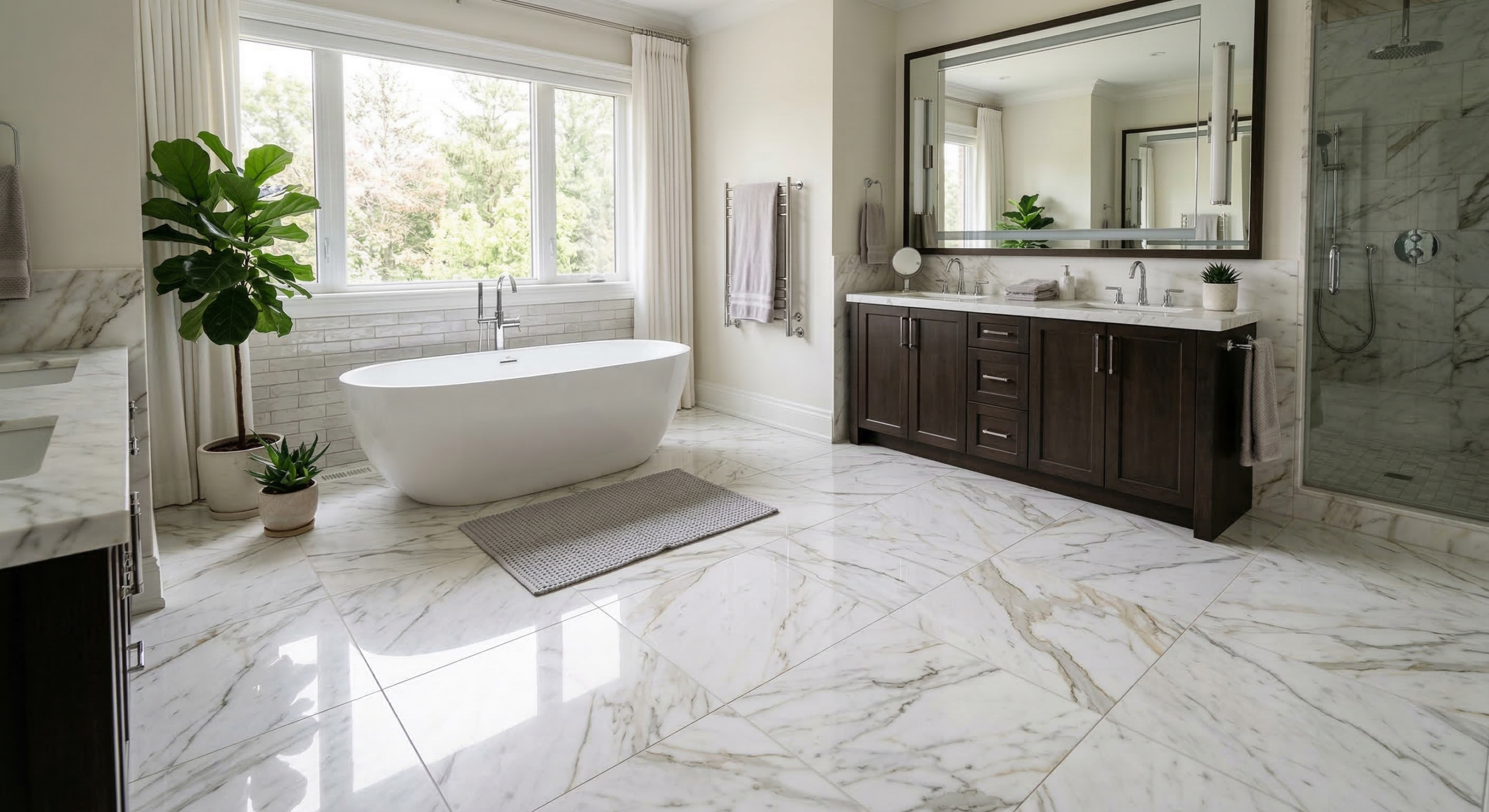
When planning a bathroom renovation, one of the biggest design decisions you will make is choosing the right countertop material. The debate around marble vs quartz for bathrooms continues to grow as homeowners weigh elegance, durability, and long term value. While both materials offer beauty and sophistication, they differ in cost, maintenance, and performance.
If you are comparing marble vs quartz bathroom cost, understanding the full picture will help you make the best investment for your space.
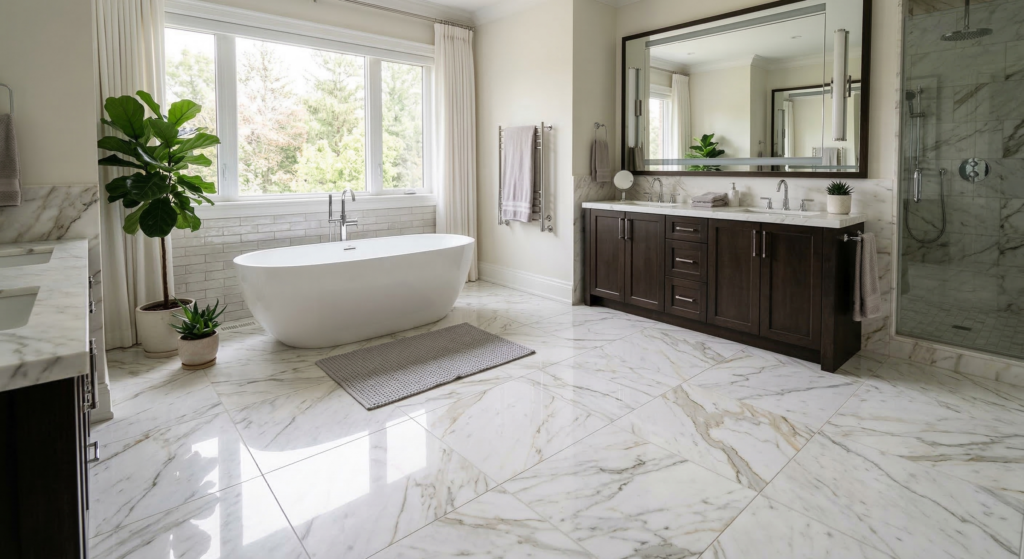
Aesthetic Appeal and Style
When planning a bathroom renovation, one of the biggest design decisions you will make is choosing the right countertop material. The debate around marble vs quartz for bathrooms continues to grow as homeowners weigh elegance, durability, and long term value. While both materials offer beauty and sophistication, they differ in cost, maintenance, and performance.
If you are comparing marble vs quartz bathroom cost, understanding the full picture will help you make the best investment for your space.
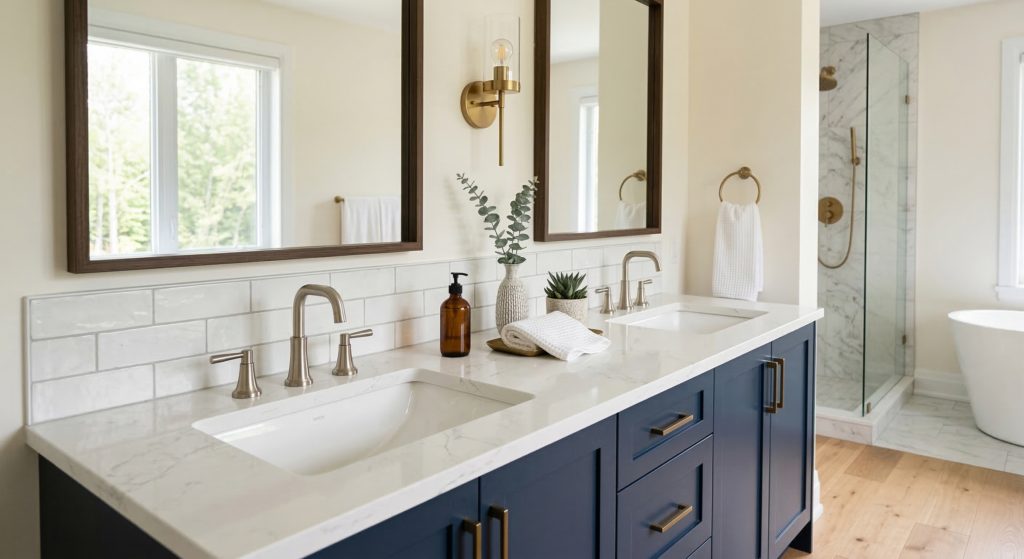
Marble vs Quartz Bathroom Cost
One of the most common questions homeowners ask is about marble vs quartz bathroom cost. Generally, marble tends to be more expensive due to quarrying, transportation, and installation requirements. The rarity of certain marble types can also increase pricing.
Quartz is often more cost predictable. While premium quartz can still be a significant investment, it typically offers a broader price range, allowing homeowners to find options that fit different budgets.
If you are specifically comparing quartz vs marble vanity price, quartz may provide better value in terms of long term durability and lower maintenance expenses.
How Much Does a Marble Bathroom Countertop Cost?
When asking how much does a marble bathroom countertop cost, the answer depends on the type of marble selected, slab thickness, edge profile, and installation complexity. On average, marble bathroom countertops can range higher per square foot than quartz, particularly for premium varieties such as Carrara or Calacatta.
In addition to material costs, professional installation is essential. Marble is heavier and more delicate during installation, which can influence labor costs.
Quartz countertops also require professional installation, but their engineered consistency can make fabrication and fitting slightly more straightforward.
Does Marble Stain in Bathrooms?
A common concern is whether marble stains in bathrooms. The answer is yes, marble is a porous natural stone. Without proper sealing and maintenance, it can absorb moisture, cosmetics, hair products, and cleaning agents, which may lead to staining or etching.
Quartz is non porous, making it more resistant to staining, water damage, and bacteria growth. For busy households or bathrooms with high moisture exposure, quartz may offer greater peace of mind.
That said, many homeowners still choose marble for its unmatched beauty and are willing to maintain it with regular sealing and gentle cleaning products.
Choosing the Right Material
Ultimately, the choice between marble and quartz comes down to your priorities. If you value natural elegance and are comfortable with maintenance, marble can create a stunning statement. If you prefer durability, lower maintenance, and more predictable pricing, quartz may be the better fit.
Granite Prestige helps homeowners compare materials, pricing, and design options to make informed renovation decisions. Their experienced team can guide you through selecting the perfect countertop for your bathroom.